Universalis

Wednesday, 31 March 2010

Lent - 43

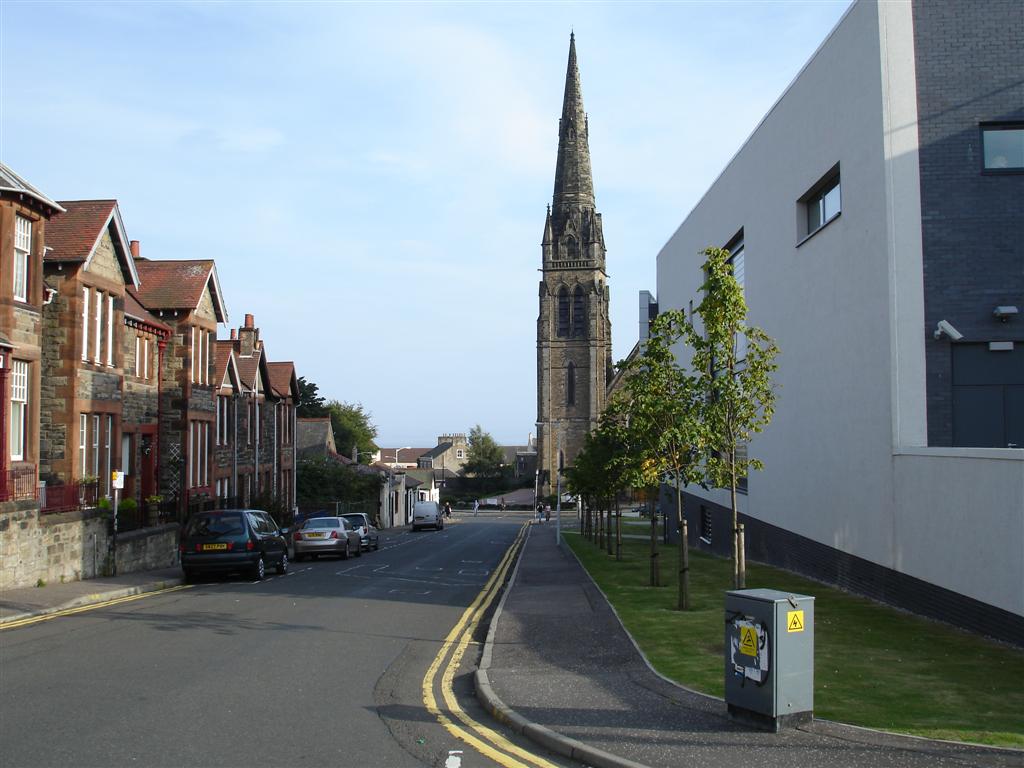
Spy Wednesday finds us in Edinburgh. Edinburgh is the capital city of Scotland. It is the second largest city in Scotland and the seventh-most populous in the United Kingdom. The City of Edinburgh Council is one of Scotland's 32 local government council areas. The city council area includes urban Edinburgh and a 30-square-mile (78 km2) rural area.

Located in the south-east of Scotland, Edinburgh lies on the east coast of the Central Belt, along the Firth of Forth, near the North Sea. Owing to its spectacular, rugged setting and vast collection of Medieval and Georgian architecture, including numerous stone tenements, it is often considered one of the most picturesque cities in Europe.

Edinburgh is the seat of the Scottish Parliament. The city was one of the major centres of the Enlightenment, led by the University of Edinburgh, earning it the nickname Athens of the North. The Old Town and New Town districts of Edinburgh were listed as a UNESCO World Heritage Site in 1995. There are over 4,500 listed buildings within the city.

In the 2008 mid year population estimates, Edinburgh had a total resident population of 471,650. Edinburgh is well-known for the annual Edinburgh Festival, a collection of official and independent festivals held annually over about four weeks from early August. The number of visitors attracted to Edinburgh for the Festival is roughly equal to the settled population of the city. The most famous of these events are the Edinburgh Fringe (the largest performing arts festival in the world), the Edinburgh International Festival, the Edinburgh Military Tattoo, and the Edinburgh International Book Festival. Other events include the Hogmanay street party (31 December), Burns Night (25 January), St. Andrew's Day (30 November), and the Beltane Fire Festival (30 April).

The city attracts 1 million overseas visitors a year, making it the second most visited tourist destination in the United Kingdom, after London. In a 2009 YouGov poll, Edinburgh was voted the "most desirable city in which to live in the UK".


"Make an altar of acacia wood for burning incense. It is to be square, a cubit long and a cubit wide, and two cubits high —its horns of one piece with it. Overlay the top and all the sides and the horns with pure gold, and make a gold moulding around it. Make two gold rings for the altar below the molding—two on opposite sides—to hold the poles used to carry it. Make the poles of acacia wood and overlay them with gold. Put the altar in front of the curtain that is before the ark of the Testimony—before the atonement cover that is over the Testimony—where I will meet with you.

"Aaron must burn fragrant incense on the altar every morning when he tends the lamps. He must burn incense again when he lights the lamps at twilight so incense will burn regularly before the LORD for the generations to come. Do not offer on this altar any other incense or any burnt offering or grain offering, and do not pour a drink offering on it. Once a year Aaron shall make atonement on its horns. This annual atonement must be made with the blood of the atoning sin offering for the generations to come. It is most holy to the LORD."

Then the LORD said to Moses, "When you take a census of the Israelites to count them, each one must pay the LORD a ransom for his life at the time he is counted. Then no plague will come on them when you number them. Each one who crosses over to those already counted is to give a half shekel, according to the sanctuary shekel, which weighs twenty gerahs. This half shekel is an offering to the LORD. All who cross over, those twenty years old or more, are to give an offering to the LORD. The rich are not to give more than a half shekel and the poor are not to give less when you make the offering to the LORD to atone for your lives. Receive the atonement money from the Israelites and use it for the service of the Tent of Meeting. It will be a memorial for the Israelites before the LORD, making atonement for your lives." (Exodus 30.1-16)

There is a green hill far away,
outside a city wall,
where our dear Lord was crucified
who died to save us all.

We may not know, we cannot tell,
what pains he had to bear,
but we believe it was for us
he hung and suffered there.

He died that we might be forgiven,
he died to make us good,
that we might go at last to heaven,
saved by his precious blood.

There was no other good enough
to pay the price of sin,
he only could unlock the gate
of heaven and let us in.

O dearly, dearly has he loved!
And we must love him too,
and trust in his redeeming blood,
and try his works to do.

Cecil Frances Alexander (1818-1895)

Tuesday, 30 March 2010

Lent - 42

We have now arrived at Queensferry. Queensferry (often referred to as South Queensferry to distinguish it from North Queensferry), originally a Royal Burgh in West Lothian, is now part of the City of Edinburgh, Scotland. It is located some ten miles to the north west of the city centre, on the shore of the Firth of Forth between the Forth Bridge and the Forth Road Bridge, approximately 8 miles (13 km) from Edinburgh Airport. In 2001 the town's population is around 12,000 people.

The town is named after Saint Margaret of Scotland who used to cross the firth by ferry from "Queen's Ferry" to visit her chapel in Edinburgh Castle. She died in 1093 and made her final journey by ferry to Dunfermline Abbey. Her son, David I of Scotland, awarded the ferry rights to the abbey.

There had been ferries at South Queensferry until 1964 when the Forth Road Bridge was opened. Ferry services continue to run from the harbour to the islands within the Firth of Forth, including Inchcolm.


"This is what you are to do to consecrate them, so they may serve me as priests: Take a young bull and two rams without defect. And from fine wheat flour, without yeast, make bread, and cakes mixed with oil, and wafers spread with oil. Put them in a basket and present them in it—along with the bull and the two rams. Then bring Aaron and his sons to the entrance to the Tent of Meeting and wash them with water. Take the garments and dress Aaron with the tunic, the robe of the ephod, the ephod itself and the breastpiece. Fasten the ephod on him by its skillfully woven waistband. Put the turban on his head and attach the sacred diadem to the turban. Take the anointing oil and anoint him by pouring it on his head. Bring his sons and dress them in tunics and put headbands on them. Then tie sashes on Aaron and his sons. The priesthood is theirs by a lasting ordinance. In this way you shall ordain Aaron and his sons.

"Bring the bull to the front of the Tent of Meeting, and Aaron and his sons shall lay their hands on its head. Slaughter it in the LORD's presence at the entrance to the Tent of Meeting. Take some of the bull's blood and put it on the horns of the altar with your finger, and pour out the rest of it at the base of the altar. Then take all the fat around the inner parts, the covering of the liver, and both kidneys with the fat on them, and burn them on the altar. But burn the bull's flesh and its hide and its offal outside the camp. It is a sin offering.

"Take one of the rams, and Aaron and his sons shall lay their hands on its head. Slaughter it and take the blood and sprinkle it against the altar on all sides. Cut the ram into pieces and wash the inner parts and the legs, putting them with the head and the other pieces. Then burn the entire ram on the altar. It is a burnt offering to the LORD, a pleasing aroma, an offering made to the LORD by fire.

"Take the other ram, and Aaron and his sons shall lay their hands on its head. Slaughter it, take some of its blood and put it on the lobes of the right ears of Aaron and his sons, on the thumbs of their right hands, and on the big toes of their right feet. Then sprinkle blood against the altar on all sides. And take some of the blood on the altar and some of the anointing oil and sprinkle it on Aaron and his garments and on his sons and their garments. Then he and his sons and their garments will be consecrated.

"Take from this ram the fat, the fat tail, the fat around the inner parts, the covering of the liver, both kidneys with the fat on them, and the right thigh. (This is the ram for the ordination.) From the basket of bread made without yeast, which is before the LORD, take a loaf, and a cake made with oil, and a wafer. Put all these in the hands of Aaron and his sons and wave them before the LORD as a wave offering. Then take them from their hands and burn them on the altar along with the burnt offering for a pleasing aroma to the LORD, an offering made to the LORD by fire. After you take the breast of the ram for Aaron's ordination, wave it before the LORD as a wave offering, and it will be your share.

"Consecrate those parts of the ordination ram that belong to Aaron and his sons: the breast that was waved and the thigh that was presented. This is always to be the regular share from the Israelites for Aaron and his sons. It is the contribution the Israelites are to make to the LORD from their fellowship offerings.

"Aaron's sacred garments will belong to his descendants so that they can be anointed and ordained in them. The son who succeeds him as priest and comes to the Tent of Meeting to minister in the Holy Place is to wear them seven days.

"Take the ram for the ordination and cook the meat in a sacred place. At the entrance to the Tent of Meeting, Aaron and his sons are to eat the meat of the ram and the bread that is in the basket. They are to eat these offerings by which atonement was made for their ordination and consecration. But no one else may eat them, because they are sacred. And if any of the meat of the ordination ram or any bread is left over till morning, burn it up. It must not be eaten, because it is sacred.

"Do for Aaron and his sons everything I have commanded you, taking seven days to ordain them. Sacrifice a bull each day as a sin offering to make atonement. Purify the altar by making atonement for it, and anoint it to consecrate it. For seven days make atonement for the altar and consecrate it. Then the altar will be most holy, and whatever touches it will be holy.

"This is what you are to offer on the altar regularly each day: two lambs a year old. Offer one in the morning and the other at twilight. With the first lamb offer a tenth of an ephah of fine flour mixed with a quarter of a hin of oil from pressed olives, and a quarter of a hin of wine as a drink offering. Sacrifice the other lamb at twilight with the same grain offering and its drink offering as in the morning—a pleasing aroma, an offering made to the LORD by fire.

"For the generations to come this burnt offering is to be made regularly at the entrance to the Tent of Meeting before the LORD. There I will meet you and speak to you; there also I will meet with the Israelites, and the place will be consecrated by my glory.

"So I will consecrate the Tent of Meeting and the altar and will consecrate Aaron and his sons to serve me as priests. Then I will dwell among the Israelites and be their God. They will know that I am the LORD their God, who brought them out of Egypt so that I might dwell among them. I am the LORD their God. (Exodus 29.1-46)


Once, only once, and once for all,
his precious life he gave;
before the cross in faith we fall,
and own it strong to save.

"One offering, single and complete,"
with lips and hearts we say;
but what he never can repeat
he shows forth day by day.

For as the priest of Aaron's line
within the holiest stood,
and sprinkled all the mercy shrine
with sacrificial blood;

So he, who once atonement wrought,
our Priest of endless power,
presents himself for those he bought
in that dark noontide hour.

His manhood pleads where now it lives
on heaven's eternal throne,
and where in mystic rite he gives
its presence to his own.

And so we show thy death, O Lord,
till thou again appear,
and feel, when we approach thy board,
we have an altar here.

William Bright, 1866

Monday, 29 March 2010

Lent - 41

Monday in Holy Week finds us in Kirkcaldy. Kirkcaldy is a town and former royal burgh in Fife, on the east coast of Scotland. It lies on a shallow bay on the northern shore of the Firth of Forth and is the largest settlement between the cities of Dundee and Edinburgh. Kirkcaldy has long been nicknamed the Lang Toun (Scots for 'long town') in reference to the 0.9 mile (1.4 km) main street of the early town, depicted so on maps as early as the 16th and 17th centuries. The street would eventually reach a length of four miles (6.4 km). The estimated population of Kirkcaldy was 48,108in 2001, making this the largest town in Fife.

Towards the end of the 11th century, Malcolm III purchased the land around the modern town to gift to the monks of the Holy Trinity (now known as Dunfermline Abbey) to fund for the building of their new church. A linear settlement began to form around a harbour on the East Burn. Early industries which soon prospered in the town included the production of textiles, nail-making and salt panning. The passing of feu-ferme status in the middle of the 15th century meant the town became semi-independent from the monks of Dunfermline Abbey. Full independence was achieved by a charter for royal burgh status granted by Charles II in 1644.

During the late 19th century, the town became a prosperous centre of linoleum. Originally developed in the town as floorcloth, this was quickly dominated by the Michael Nairn & Co but did not become popular across a worldwide scale until the beginning of the 20th century. Other industries such as coal, flour, malt, printing, light electrical engineering and furniture manufacturing rose in prominence.

After the Second World War, a plan saw new housing estates being built to the north-west of the town along with multi-storey flats and the redevelopment of older areas such as Gallatown, Sinclairtown and Pathhead. The population of the town was expected to reach between 55,000 and 70,000, but this was shattered when the production of linoleum declined in the middle of the 1960s.


"Make the robe of the ephod entirely of blue cloth, with an opening for the head in its center. There shall be a woven edge like a collar around this opening, so that it will not tear. Make pomegranates of blue, purple and scarlet yarn around the hem of the robe, with gold bells between them. The gold bells and the pomegranates are to alternate around the hem of the robe. Aaron must wear it when he ministers. The sound of the bells will be heard when he enters the Holy Place before the LORD and when he comes out, so that he will not die.

"Make a plate of pure gold and engrave on it as on a seal:HOLY TO THE LORD. Fasten a blue cord to it to attach it to the turban; it is to be on the front of the turban. It will be on Aaron's forehead, and he will bear the guilt involved in the sacred gifts the Israelites consecrate, whatever their gifts may be. It will be on Aaron's forehead continually so that they will be acceptable to the LORD.

"Weave the tunic of fine linen and make the turban of fine linen. The sash is to be the work of an embroiderer. Make tunics, sashes and headbands for Aaron's sons, to give them dignity and honour. After you put these clothes on your brother Aaron and his sons, anoint and ordain them. Consecrate them so they may serve me as priests.

"Make linen undergarments as a covering for the body, reaching from the waist to the thigh. Aaron and his sons must wear them whenever they enter the Tent of Meeting or approach the altar to minister in the Holy Place, so that they will not incur guilt and die.

"This is to be a lasting ordinance for Aaron and his descendants. (Exodus 28.31-43)

Who is this with garments gory,
Triumphing from Bozrah’s way;
This that weareth robes of glory,
Bright with more than victory’s ray?
Who is this unwearied comer
From his journey’s sultry length,
Traveling through Idumè’s summer
In the greatness of his strength?

Wherefore red in thine apparel
Like the conquerors of the earth,
And arrayed like those who carol
O’er the reeking vineyard’s mirth?
Who art thou, the valleys seeking
Where our peaceful harvests wave?
“I, in righteous anger speaking,
I, the mighty One to save.”

“I, that of the raging heathen
Trod the winepress all alone,
Now in victor garlands wreathen
Coming to redeem Mine own:
I am He with sprinkled raiment,
Glorious for My vengeance hour,
Ransoming, with priceless payment,
And delivering with power.”

Hail! All hail! Thou Lord of Glory!
Thee, our Father, Thee we own;
Abraham heard not of our story,
Israel ne’er our Name hath known.
But, Redeemer, Thou hast sought us,
Thou hast heard Thy children’s wail,
Thou with Thy dear blood hast bought us:
Hail! Thou mighty Victor, hail!


Bishop A Cleveland Coxe (1818-1896)

Sunday, 28 March 2010

Lent - 40

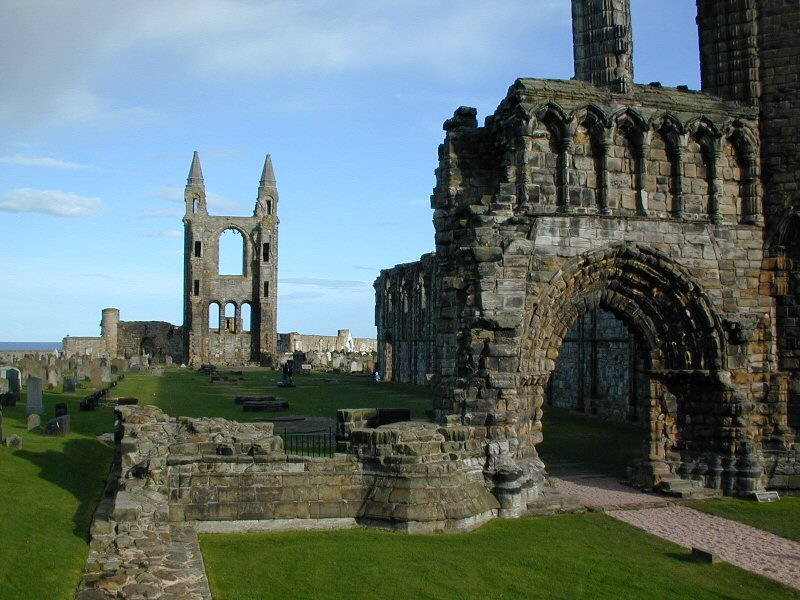
We have arrived at St Andrews for our Palm Sunday Procession. St Andrews is a university town and former royal burgh on the east coast of Fife in Scotland. The town is named after Saint Andrew the Apostle. St Andrews had a population of 16,596 in 2001, making this the fifth largest settlement in Fife.

There has been an important church in St Andrews since at least the 8th century, and a bishopric since at least the 11th century. The settlement grew to the west of St Andrews cathedral with the southern side of the Scores to the north and the Kinness burn to the south. The burgh soon became the ecclesiastical capital of Scotland, a position which was held until the Scottish Reformation. The famous cathedral, the largest in Scotland, now lies in ruins.

Today, St Andrews is known worldwide as the "home of golf". This is in part because the Royal and Ancient Golf Club, founded in 1754, exercises legislative authority over the game worldwide (except in the United States and Mexico), and also because the famous links (acquired by the town in 1894) is the most frequent venue for The Open Championship, the oldest of golf's four major championships. Visitors travel to St Andrews in great numbers for several courses ranked amongst the finest in the world, as well as for the sandy beaches.

The town is also home to the University of St Andrews, the third oldest university in the English-speaking world and one of the UK's most prestigious. The University is an integral part of the burgh, and during term time students make up approximately one third of the town's population.


"Have Aaron your brother brought to you from among the Israelites, along with his sons Nadab and Abihu, Eleazar and Ithamar, so they may serve me as priests. Make sacred garments for your brother Aaron, to give him dignity and honour. Tell all the skilled men to whom I have given wisdom in such matters that they are to make garments for Aaron, for his consecration, so he may serve me as priest. These are the garments they are to make: a breastpiece, an ephod, a robe, a woven tunic, a turban and a sash. They are to make these sacred garments for your brother Aaron and his sons, so they may serve me as priests. Have them use gold, and blue, purple and scarlet yarn, and fine linen.

"Make the ephod of gold, and of blue, purple and scarlet yarn, and of finely twisted linen—the work of a skilled craftsman. It is to have two shoulder pieces attached to two of its corners, so it can be fastened. Its skillfully woven waistband is to be like it—of one piece with the ephod and made with gold, and with blue, purple and scarlet yarn, and with finely twisted linen.

"Take two onyx stones and engrave on them the names of the sons of Israel in the order of their birth—six names on one stone and the remaining six on the other. Engrave the names of the sons of Israel on the two stones the way a gem cutter engraves a seal. Then mount the stones in gold filigree settings and fasten them on the shoulder pieces of the ephod as memorial stones for the sons of Israel. Aaron is to bear the names on his shoulders as a memorial before the LORD. Make gold filigree settings and two braided chains of pure gold, like a rope, and attach the chains to the settings.

"Fashion a breastpiece for making decisions—the work of a skilled craftsman. Make it like the ephod: of gold, and of blue, purple and scarlet yarn, and of finely twisted linen. It is to be square—a span long and a span wide—and folded double. Then mount four rows of precious stones on it. In the first row there shall be a ruby, a topaz and a beryl; in the second row a turquoise, a sapphire and an emerald; in the third row a jacinth, an agate and an amethyst; in the fourth row a chrysolite, an onyx and a jasper. [ Mount them in gold filigree settings. There are to be twelve stones, one for each of the names of the sons of Israel, each engraved like a seal with the name of one of the twelve tribes.

"For the breastpiece make braided chains of pure gold, like a rope. Make two gold rings for it and fasten them to two corners of the breast-piece. Fasten the two gold chains to the rings at the corners of the breast-piece, and the other ends of the chains to the two settings, attaching them to the shoulder pieces of the ephod at the front. Make two gold rings and attach them to the other two corners of the breastpiece on the inside edge next to the ephod. Make two more gold rings and attach them to the bottom of the shoulder pieces on the front of the ephod, close to the seam just above the waistband of the ephod. The rings of the breastpiece are to be tied to the rings of the ephod with blue cord, connecting it to the waistband, so that the breastpiece will not swing out from the ephod.

"Whenever Aaron enters the Holy Place, he will bear the names of the sons of Israel over his heart on the breastpiece of decision as a continuing memorial before the LORD. Also put the Urim and the Thummim in the breastpiece, so they may be over Aaron's heart whenever he enters the presence of the LORD. Thus Aaron will always bear the means of making decisions for the Israelites over his heart before the LORD. (Exodus 28.1-30)

Ride on! ride on in majesty!
Hark! all the tribes hosanna cry;
O Saviour meek, pursue thy road
with palms and scattered garments strowed.

Ride on! ride on in majesty!
In lowly pomp ride on to die;
O Christ, thy triumphs now begin
o'er captive death and conquered sin.

Ride on! ride on in majesty!
The angel-squadrons of the sky
look down with sad and wondering eyes
to see the approaching sacrifice.

Ride on! ride on in majesty!
Thy last and fiercest strife is nigh;
the Father on his sapphire throne
expects his own anointed Son.

Ride on! ride on in majesty!
In lowly pomp ride on to die;
bow thy meek head to mortal pain,
then take, O God, thy power, and reign.


Henry Hart Milman (1791-1868)

Happy Sunday!

Saturday, 27 March 2010

Lent - 39

We have arrived in Dundee. Dundee is the fourth-largest city in Scotland (after Glasgow, Edinburgh, and Aberdeen) and, fully named as Dundee City, one of Scotland's 32 local government council areas. It lies on the north bank of the Firth of Tay, which feeds into the North Sea.

Evidence suggests Dundee has been continuously occupied since the Mesolithic. The town developed into a burgh in Medieval times, and expanded rapidly in the 19th century largely due to the jute industry. This, along with its other major industries gave Dundee its epithet as the city of "jam, jute and journalism".

In mid-2006, the population of Dundee City was estimated to be 141,930, with a metropolitan population of 159,522. Dundee's recorded population reached a peak of 182,204 at the time of the 1971 census, but has since declined due to outward migration.

Today, Dundee is promoted as the City of Discovery, in honour of Dundee's history of scientific activities and of the RRS Discovery, Robert Falcon Scott's Antarctic exploration vessel, which was built in Dundee and is now berthed in the city harbour. Biomedical and technological industries have arrived since the 1980s, and the city now accounts for 10% of the United Kingdom's digital-entertainment industry. Dundee has two universities—the University of Dundee and the University of Abertay Dundee.


"Build an altar of acacia wood, three cubits high; it is to be square, five cubits long and five cubits wide. Make a horn at each of the four corners, so that the horns and the altar are of one piece, and overlay the altar with bronze. Make all its utensils of bronze—its pots to remove the ashes, and its shovels, sprinkling bowls, meat forks and firepans. Make a grating for it, a bronze network, and make a bronze ring at each of the four corners of the network. Put it under the ledge of the altar so that it is halfway up the altar. Make poles of acacia wood for the altar and overlay them with bronze. The poles are to be inserted into the rings so they will be on two sides of the altar when it is carried. Make the altar hollow, out of boards. It is to be made just as you were shown on the mountain.

"Make a courtyard for the tabernacle. The south side shall be a hundred cubits long and is to have curtains of finely twisted linen, with twenty posts and twenty bronze bases and with silver hooks and bands on the posts. The north side shall also be a hundred cubits long and is to have curtains, with twenty posts and twenty bronze bases and with silver hooks and bands on the posts.

"The west end of the courtyard shall be fifty cubits wide and have curtains, with ten posts and ten bases. On the east end, toward the sunrise, the courtyard shall also be fifty cubits wide. Curtains fifteen cubits long are to be on one side of the entrance, with three posts and three bases, and curtains fifteen cubits long are to be on the other side, with three posts and three bases.

"For the entrance to the courtyard, provide a curtain twenty cubits long, of blue, purple and scarlet yarn and finely twisted linen—the work of an embroiderer—with four posts and four bases. All the posts around the courtyard are to have silver bands and hooks, and bronze bases. The courtyard shall be a hundred cubits long and fifty cubits wide, with curtains of finely twisted linen five cubits high, and with bronze bases. All the other articles used in the service of the tabernacle, whatever their function, including all the tent pegs for it and those for the courtyard, are to be of bronze.

"Command the Israelites to bring you clear oil of pressed olives for the light so that the lamps may be kept burning. In the Tent of Meeting, outside the curtain that is in front of the Testimony, Aaron and his sons are to keep the lamps burning before the LORD from evening till morning. This is to be a lasting ordinance among the Israelites for the generations to come. (Exodus 27.1-21)


Give me oil in my lamp, keep me burning
Give me oil in my lamp, I pray
Give me oil in my lamp, keep me burning
Keep me burning 'til the break of day


Sing hosanna, sing hosanna
Sing hosanna to the King of Kings
Sing hosanna, sing hosanna
Sing hosanna to the King of Kings


Give me joy in my heart, keep me praising
Give me joy in my heart, I pray
Give me joy in my heart, keep me praising
Keep me praising 'til the break of day


Sing hosanna, sing hosanna
Sing hosanna to the King of Kings
Sing hosanna, sing hosanna
Sing hosanna to the King of Kings


Give me peace in my heart, keep me resting
Give me peace in my heart, I pray
Give me peace in my heart, keep me resting
Keep me resting 'til the break of day


Sing hosanna, sing hosanna
Sing hosanna to the King of Kings
Sing hosanna, sing hosanna
Sing hosanna to the King of Kings


Give me love in my heart, keep me serving
Give me love in my heart, I pray
Give me love in my heart, keep me serving
Keep me serving 'til the break of day


Sing hosanna, sing hosanna
Sing hosanna to the King of Kings
Sing hosanna, sing hosanna
Sing hosanna to the King of Kings


Traditional Spiritual

We are now ready to celebrate Palm Sunday at the next break of day!

Friday, 26 March 2010

Lent - 38

We have now arrived at Arbroath. Arbroath is a former royal burgh and the largest town in the council area of Angus in Scotland, and in 2001 had a population of 22,785. It lies on the North Sea coast, around 16 miles (25.7 km) ENE of Dundee and 45 miles (72.4 km) SSW of Aberdeen.

While there is evidence for settlement of the area now occupied by the town that dates back to the Iron Age, Arbroath's history as a town begins in the High Middle Ages with the founding of Arbroath Abbey in 1178.

Arbroath grew considerably during the Industrial Revolution owing to the expansion of firstly the flax and secondly the jute industries and the engineering sector. A new harbour was built in 1839 and by the 1900s, Arbroath had become one of the larger fishing ports in Scotland.

The town is notable as the home of the Declaration of Arbroath, as well as the Arbroath Smokie - a most suitable fish for this Lenten Friday.


"Make the tabernacle with ten curtains of finely twisted linen and blue, purple and scarlet yarn, with cherubim worked into them by a skilled craftsman. All the curtains are to be the same size—twenty-eight cubits long and four cubits wide. Join five of the curtains together, and do the same with the other five. Make loops of blue material along the edge of the end curtain in one set, and do the same with the end curtain in the other set. Make fifty loops on one curtain and fifty loops on the end curtain of the other set, with the loops opposite each other. Then make fifty gold clasps and use them to fasten the curtains together so that the tabernacle is a unit.

"Make curtains of goat hair for the tent over the tabernacle—eleven altogether. All eleven curtains are to be the same size—thirty cubits long and four cubits wide. Join five of the curtains together into one set and the other six into another set. Fold the sixth curtain double at the front of the tent. Make fifty loops along the edge of the end curtain in one set and also along the edge of the end curtain in the other set. Then make fifty bronze clasps and put them in the loops to fasten the tent together as a unit. As for the additional length of the tent curtains, the half curtain that is left over is to hang down at the rear of the tabernacle. The tent curtains will be a cubit longer on both sides; what is left will hang over the sides of the tabernacle so as to cover it. Make for the tent a covering of ram skins dyed red, and over that a covering of hides of sea cows.

"Make upright frames of acacia wood for the tabernacle. Each frame is to be ten cubits long and a cubit and a half wide, 17 with two projections set parallel to each other. Make all the frames of the tabernacle in this way. Make twenty frames for the south side of the tabernacle and make forty silver bases to go under them—two bases for each frame, one under each projection. For the other side, the north side of the tabernacle, make twenty frames and forty silver bases—two under each frame. Make six frames for the far end, that is, the west end of the tabernacle, and make two frames for the corners at the far end. At these two corners they must be double from the bottom all the way to the top, and fitted into a single ring; both shall be like that. So there will be eight frames and sixteen silver bases—two under each frame.

"Also make crossbars of acacia wood: five for the frames on one side of the tabernacle, five for those on the other side, and five for the frames on the west, at the far end of the tabernacle. The centre crossbar is to extend from end to end at the middle of the frames. Overlay the frames with gold and make gold rings to hold the crossbars. Also overlay the crossbars with gold.

"Set up the tabernacle according to the plan shown you on the mountain.

"Make a curtain of blue, purple and scarlet yarn and finely twisted linen, with cherubim worked into it by a skilled craftsman. Hang it with gold hooks on four posts of acacia wood overlaid with gold and standing on four silver bases. Hang the curtain from the clasps and place the ark of the Testimony behind the curtain. The curtain will separate the Holy Place from the Most Holy Place. Put the atonement cover on the ark of the Testimony in the Most Holy Place. Place the table outside the curtain on the north side of the tabernacle and put the lampstand opposite it on the south side.

"For the entrance to the tent make a curtain of blue, purple and scarlet yarn and finely twisted linen—the work of an embroiderer. Make gold hooks for this curtain and five posts of acacia wood overlaid with gold. And cast five bronze bases for them. (Exodus 26.1-37)

We love the place, O God,
Wherein Thine honour dwells;
The joy of Thine abode
All earthly joy excels.

It is the house of prayer
Wherein Thy servants meet;
And Thou, O Lord, art there
Thy chosen flock to greet.

We love the sacred font;
For there the holy Dove
To pour is ever wont
His blessings from above.

We love Thine altar, Lord;
Oh, what on earth so dear?
For there, in faith adored
We find Thy presence near.

We love the Word of life,
The Word that tells of peace,
Of comfort in the strife,
And joys that never cease.

We love to sing below
For mercies freely giv’n;
But, oh, we long to know
The triumph song of Heav’n.

Lord Jesus, give us grace
On earth to love Thee more,
In Heav’n to see Thy face,
And with Thy saints adore.


W Bullock (1798-1874) and Sir H W Baker (1821-1877)

Thursday, 25 March 2010

Lent - 37

We have now arrived at Montrose for our celebration of the Annunciation of the Lord. Montrose is a Scottish coastal resort town and former royal burgh in Angus. It is situated 38 miles (61 km) north east of Dundee between the mouths of the North and South Esk rivers. It is the northernmost coastal town in Angus and developed at a natural harbour that traded in skins, hides and cured salmon in medieval times.

With a population of approximately 12,000, the town functions as a port, but the major employer is GlaxoSmithKline, recently saved from closure. The skyline of Montrose is dominated by the 220 foot steeple, designed by James Gillespie Graham and built between 1832 and 1834.

Montrose is a town with a wealth of architecture, and is a centre for international trade. It is an important commercial port for the thriving oil and gas industry. It it known for its wide thoroughfare and high street which leads to picturesque closes containing secluded gardens.

The town has a view of a two square mile tidal lagoon, Montrose Basin, which is considered a nature reserve of international importance. It is the largest inland salt water basin in the UK, and an important habitat for the mute swan. Just outside Montrose is the 18th Century House of Dun, designed by the Scottish architect William Adam and built in 1730 for David Erskine, 13th Laird of Dun.


The LORD said to Moses, "Tell the Israelites to bring me an offering. You are to receive the offering for me from each man whose heart prompts him to give. These are the offerings you are to receive from them: gold, silver and bronze; blue, purple and scarlet yarn and fine linen; goat hair; ram skins dyed red and hides of sea cows; acacia wood; olive oil for the light; spices for the anointing oil and for the fragrant incense; and onyx stones and other gems to be mounted on the ephod and breast-piece.

"Then have them make a sanctuary for me, and I will dwell among them. Make this tabernacle and all its furnishings exactly like the pattern I will show you.

"Have them make a chest of acacia wood—two and a half cubits long, a cubit and a half wide, and a cubit and a half high. Overlay it with pure gold, both inside and out, and make a gold molding around it. Cast four gold rings for it and fasten them to its four feet, with two rings on one side and two rings on the other. Then make poles of acacia wood and overlay them with gold. Insert the poles into the rings on the sides of the chest to carry it. The poles are to remain in the rings of this ark; they are not to be removed. Then put in the ark the Testimony, which I will give you.

"Make an atonement cover of pure gold—two and a half cubits long and a cubit and a half wide. And make two cherubim out of hammered gold at the ends of the cover. Make one cherub on one end and the second cherub on the other; make the cherubim of one piece with the cover, at the two ends. The cherubim are to have their wings spread upward, overshadowing the cover with them. The cherubim are to face each other, looking toward the cover. Place the cover on top of the ark and put in the ark the Testimony, which I will give you. There, above the cover between the two cherubim that are over the ark of the Testimony, I will meet with you and give you all my commands for the Israelites.

"Make a table of acacia wood—two cubits long, a cubit wide and a cubit and a half high. Overlay it with pure gold and make a gold molding around it. Also make around it a rim a handbreadth wide and put a gold molding on the rim. Make four gold rings for the table and fasten them to the four corners, where the four legs are. The rings are to be close to the rim to hold the poles used in carrying the table. Make the poles of acacia wood, overlay them with gold and carry the table with them. And make its plates and dishes of pure gold, as well as its pitchers and bowls for the pouring out of offerings. Put the bread of the Presence on this table to be before me at all times.

"Make a lampstand of pure gold and hammer it out, base and shaft; its flowerlike cups, buds and blossoms shall be of one piece with it. Six branches are to extend from the sides of the lampstand—three on one side and three on the other. Three cups shaped like almond flowers with buds and blossoms are to be on one branch, three on the next branch, and the same for all six branches extending from the lampstand. And on the lampstand there are to be four cups shaped like almond flowers with buds and blossoms. One bud shall be under the first pair of branches extending from the lampstand, a second bud under the second pair, and a third bud under the third pair—six branches in all. The buds and branches shall all be of one piece with the lampstand, hammered out of pure gold.

"Then make its seven lamps and set them up on it so that they light the space in front of it. Its wick trimmers and trays are to be of pure gold. A talent of pure gold is to be used for the lampstand and all these accessories. See that you make them according to the pattern shown you on the mountain. (Exodus 25.1-40)

The angel Gabriel from heaven came,
his wings as drifted snow, his eyes as flame;
"All hail," said he, "thou lowly maiden Mary,
most highly favoured lady," Gloria!

"For know a blessed Mother thou shalt be,
all generations laud and honour thee,
thy Son shall be Emmanuel, by seers foretold,
most highly favoured lady," Gloria!

Then gentle Mary meekly bowed her head,
"To me be as it pleaseth God," she said,
"my soul shall laud and magnify his holy Name."
Most highly favoured lady, Gloria!

Of her, Emmanuel, the Christ, was born
in Bethlehem, all on a Christmas morn,
and Christian folk throughout the world will ever say--
"Most highly favoured lady," Gloria!


Words: Basque Carol
trans. Sabine Baring-Gould (1834-1924)

Happy Feast!